Understanding Property Tax Malaysia: A Complete Guide
Understanding property tax Malaysia is essential for anyone buying, selling, or investing in real estate. Whether you’re a local homeowner or an international investor, knowing the tax structure helps you plan better and avoid unexpected costs.
Yip Tan
5/24/20267 min read
Property tax can feel like a maze, especially if you’re buying or managing high‑end assets in Kuala Lumpur. The numbers matter, the deadlines matter, and the rules can change without a loud announcement. In this guide we break down every piece you need to own, calculate, and pay property tax in Malaysia, so you can focus on the view from your new balcony instead of the paperwork. KLCC Investor offers curated guidance to help you navigate these obligations.
We’ll explain what the tax is, how the rates are set, who must pay, when the bills arrive, what reliefs you might claim, and how to fix the most common snags. By the end you’ll have a step‑by‑step checklist you can use the next time you receive a tax bill.
Table of Contents
What is Property Tax in Malaysia?
How Property Tax is Calculated in Malaysia
Who Pays Property Tax and Payment Timelines
Exemptions, Reliefs, and Concessions Available
Common Issues and How to Resolve Them
FAQ
Conclusion
What is Property Tax in Malaysia?
In Malaysia the term “property tax” generally covers two recurring charges levied by state or local authorities: the annual “cukai pintu” (also called quit rent) and the assessment rate based on the property's gross annual value. Both are calculated on the land and any permanent structures, not on the market price you paid.
The law governing these charges is set out in the Property Tax Act (PDF). It defines the tax base, the assessment process, and the powers of local councils to collect the rates.
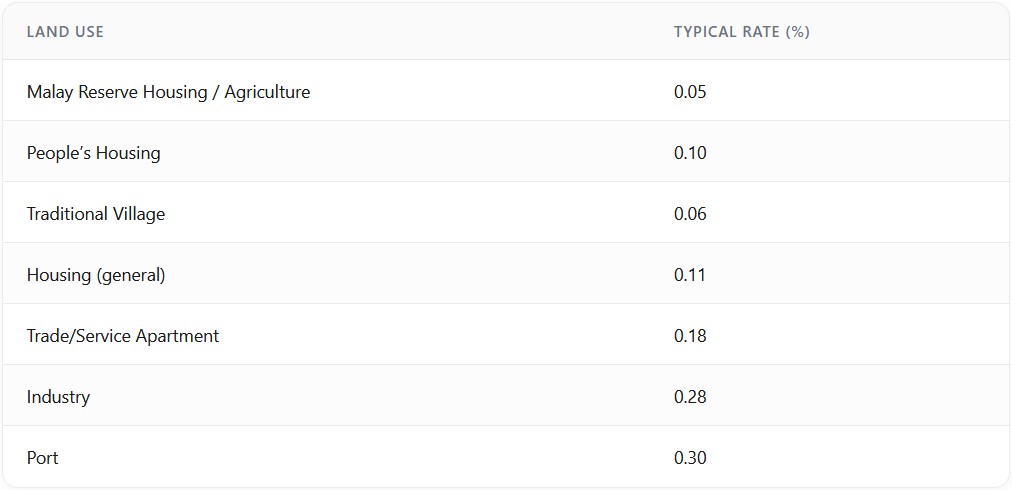
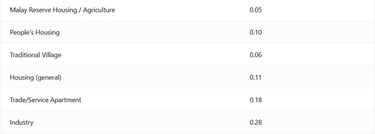
Different land‑use categories attract different rates. For example, residential land in a low‑density area may be taxed at 0.05 % of its assessed value, while a commercial port zone could be as high as 0.30 %. Below is a snapshot of typical rates used by many councils, drawn from public schedules such as the Iskandar Puteri City Council (MBIP) rates.
Who Pays Property Tax and Payment Timelines
All owners , individuals, companies, and trusts , are on the hook for property tax. The liability follows the title, not the occupancy. If you rent out a condo, you still receive the tax bill; you can pass the cost to tenants, but that must be stated in the lease.
The tax year in Malaysia follows the calendar year (1 January , 31 December). Bills are usually issued twice a year: the first half in January‑February and the second half in July‑August. Payment is due within 30 days of each notice, though many councils allow online e‑filing and e‑payment through the Inland Revenue Board’s portal.
For salaried Malaysians, the tax office may collect the amount via a PAYE adjustment if the property generates rental income. For foreign investors, the bill is sent directly to the registered address, and you’ll need to settle it via bank transfer or a local agent.
Late payments attract a penalty of 5 % plus interest, so set a calendar reminder as soon as you get the notice.
A recent tax summary notes that property tax is levied on the gross annual value, not the market value, and that the self‑assessment system places the calculation responsibility on the owner.
Our partner agency also publishes a timeline chart you can download to keep track of each due date
FAQ
What is the difference between quit rent and property tax?
Quit rent (cukai tanah) is a flat, historically‑based charge that reflects the ownership of land. Property tax (cukai pintu) is an annual levy calculated on the assessed value of the land and any permanent structures, using a rate that depends on land use. Both are payable to the local authority, but quit rent is usually a smaller, fixed amount.
Do foreign investors pay a higher property tax rate?
No. Malaysia applies the same assessment rates to locals and foreigners. The only extra cost a foreign buyer might face is the stamp duty on the transfer, not an additional property‑tax surcharge.
How often can I claim a relief on my property tax?
Most reliefs are claimed once per year when you file your assessment. Some, like the first‑home buyer relief, are limited to a single claim over the life of the property. Others, such as EV‑charging expenses, can be claimed again after two assessment years, as specified in the exemption guidelines.
What happens if I miss a payment deadline?
Late payments attract a 5 % penalty plus interest calculated daily. The tax office will send a reminder, but the penalty is applied automatically. To avoid it, set up a reminder a week before each bill’s due date.
Can I appeal an assessment if I think the AV is too high?
Yes. You can file an appeal using Form Q within 30 days of receiving the notice. Attach supporting documents like recent sales of comparable properties, a professional valuation, or evidence of errors in the council’s calculations. The appeal process is described in detail on the official portal.
Is there an online portal to view and pay my property tax?
Most states provide an e‑services portal through the Inland Revenue Board (LHDN). After logging in with your NRIC or passport number, you can view the assessment notice, see any pending reliefs, and pay via online banking or credit card.
Do property tax rates vary between states?
Yes. Each state sets its own quit‑rent amount and may have slightly different assessment rate schedules. However, the land‑use categories (residential, commercial, industrial, etc.) are consistent nationwide, so the structure of the calculation remains the same.
How can I estimate my property tax before the official assessment?
Use the assessed value percentage (usually 30‑40 % of market price) and multiply it by the rate for your land‑use category. Add the standard quit rent for your state.
Conclusion
Property tax in Malaysia is a predictable, data‑driven cost that every owner must budget for. By understanding the two‑part structure, tracking the bi‑annual bill dates, and using the reliefs that apply to you, you can keep the expense in check and avoid penalties. The key is to stay organized, verify assessments each year, and act quickly if something looks off.
We hope this guide has turned a complex topic into a clear checklist you can follow. For more detailed insights on related taxes such as stamp duty or rental income tax, explore our other resources on the KLCC Investor site. Knowledge is the first step toward making your luxury property a true statement of growth and prestige.
Key Takeaway: Property tax in Malaysia is a dual charge, quit rent plus assessment rate, both based on land use and assessed value, not on sale price.
How Property Tax is Calculated in Malaysia
Calculating the annual bill is a two‑step arithmetic exercise. First, you need the assessed value (AV) of your land and building. Second, you apply the relevant rate for your land‑use category.
Step 1 , Find the assessed value. The local council issues a notice that lists the AV, usually expressed as a percentage of the market price. If your condo was bought for RM 1,200,000 and the council’s assessment rate is 35 %, the AV is RM 420,000.
Step 2 , Apply the rate. Suppose your unit falls under the “Housing” category with a rate of 0.11 %. Multiply RM 420,000 × 0.0011 = RM 462. That figure is the assessment component of your property tax.
Don’t forget quit rent, which is a flat amount set by the state. In Selangor, for a typical residential plot, quit rent might be around RM 150 per year. Add that to the assessment figure for the total payable amount.
Here’s a quick checklist you can use each year:
Locate the latest assessment notice from your council.
Verify the land‑use category and corresponding rate.
Calculate assessment = AV × rate.
Add the fixed quit rent amount.
Check for any reliefs or exemptions you qualify for.
Always keep original receipts , the tax office may request them during an audit.
For a hands‑on way to work out how any of these reliefs affect your bill, try our property tax calculator. Input your AV, select applicable reliefs, and it spits out the net amount.
For the full legal wording, see the Hasil exemption details, the official government page that lists each provision.
For investors, the good news is that foreign buyers do not face a separate surcharge; the same rates apply to locals and overseas purchasers alike. That makes Malaysia a relatively tax‑friendly destination for high‑net‑worth buyers looking for a statement address in KLCC.
Pro Tip: Keep a detailed spreadsheet of purchase price, improvement costs and selling expenses. The numbers will line up when you file, and you’ll avoid over‑paying.
Exemptions, Reliefs, and Concessions Available
Malaysia’s tax code offers several reliefs that can shave off a portion of your property tax bill. Most of these are aimed at encouraging home ownership, supporting disabled persons, or promoting green technology.
Key exemptions include:
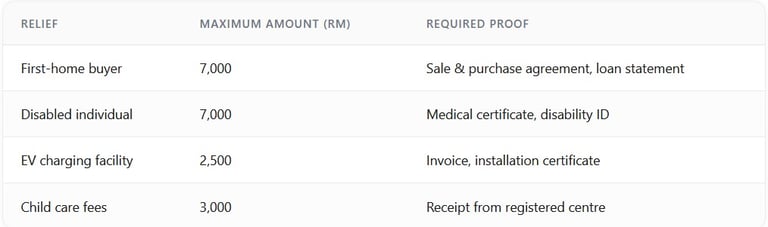
First‑home buyer relief , up to RM 7,000 for houses priced between RM 500,000 and RM 750,000.
Disabled individual relief , RM 6,000 to RM 7,000 depending on the category.
Electric‑vehicle charging station expense , RM 2,500 (non‑business use).
The official source for these benefits is the Inland Revenue Board’s exemption page. It lists the exact amounts, eligibility criteria, and the forms you need to attach to your tax return.
When you claim a relief, you must file a supplementary “Form Q” with your assessment notice. The deadline matches the regular payment due date, so plan ahead.
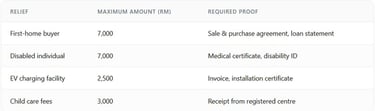
Below is a quick matrix of the most common reliefs and the documents required.
Common Issues and How to Resolve Them
Even seasoned investors hit snags with property tax. Below are the most frequent problems and what to do about them.
1. Assessment not updated after renovation.If you added floor area, the AV should rise. Submit a “re‑valuation request” form to the council, attach the building plan, and pay a modest processing fee. Failure to update can lead to under‑assessment penalties later.
2. Missing quit rent notice.Some owners assume the assessment bill includes quit rent. If you receive a separate quit rent invoice, pay it promptly to avoid the 5 % penalty. Keep both notices together for record‑keeping.
3. Dispute over land‑use classification.If you believe your property is mis‑classified (e.g., commercial instead of residential), you can appeal using Form Q. The appeal procedure is outlined in the public ruling Hasil appeal guide. Provide evidence such as a zoning map or a developer’s certificate.
Research shows that the biggest driver of successful reassessment is relational capital , the quality of interaction between council officers and taxpayers. That means a polite, well‑documented request often gets processed faster.
Study on property tax reassessment performance highlights this point.
Usable steps to keep your tax affairs smooth:
Mark the two bill dates on your calendar and set automated reminders.
Store every assessment notice, payment receipt, and relief approval in a dedicated folder (physical or digital).
Review the AV each year , a sudden jump may signal a re‑valuation you didn’t request.
If you’re unsure about a charge, contact the council’s tax department directly; many have English‑speaking staff.