
How to Buy Bank Lelong Property in Malaysia
Learn how to buy bank lelong property in Malaysia step by step. From finding auctions to winning bids, this guide covers everything you need to know from an investor perspective.
Yip Tan
5/13/20267 min read
Buying a bank lelong property sounds like a shortcut to a bargain. And it can be. But the road is lined with hidden costs and traps. One surprise: legal eviction fees can hit RM15,000. That's more than many deposits. Still, with the right steps, you can buy a bank lelong property at a discount and build real wealth.
This guide walks you through the entire process. From understanding auction types to post-purchase headaches. We'll use real numbers and proven checklists. By the end, you'll know exactly what to do.
Let's start.
Table of Contents
Step 1: Understand Bank Lelong and Auction Types
Step 2: Find and Research Lelong Properties
Step 3: Inspect and Evaluate the Property
Step 4: Prepare Financing and Bid
Step 5: Complete the Purchase and Post-Auction
Frequently Asked Questions
Conclusion
Step 1: Understand Bank Lelong and Auction Types
Bank lelong property means the bank has repossessed the home and is selling it at auction. Why? The owner stopped paying the loan. The bank wants its money back fast. That's your chance to buy below market value.
There are two main auction types in Malaysia: LACA-approved and non-LACA. LACA stands for Loan Agreement Cum Assignment. LACA-approved auctions require a minimum 5% deposit. Non-LACA auctions need 10%.
Here's a quick comparison:


It will say "LACA" or "non-LACA." Register the bidding at least one day ahead of the auction date along with the deposit.
Another key point: the reserve price. That's the minimum price the bank accepts. It's often set below market value. But don't assume it's a steal. Many banks set it close to market. You need to do your homework.
Key Takeaway: Know the auction type before you go , deposit percentages differ and a mistake costs you the chance to bid.
Bottom line: Understanding the two auction types and their deposit rules is the first critical step in buying a bank lelong property without getting disqualified.
Step 2: Find and Research Lelong Properties
Now you know the basics. Time to find deals. Bank lelong property listings appear on several platforms. The most common are property portals like iProperty and PropertyGenie. Banks also list on their own websites. And there's the government e-lelong portal.
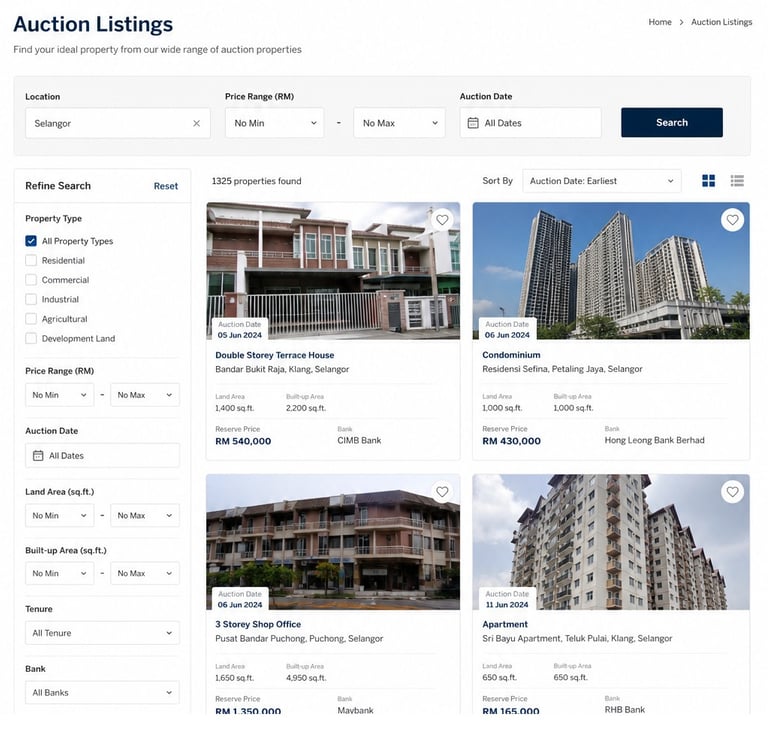
But not all listings are equal. Many are outdated or have errors. Here's how to research effectively:
Check the auction date and venue. Is it online or physical?
Look at the reserve price. Compare it to recent sold prices in the same area.
Read the terms and conditions. Some auctions have special clauses.
Search for the property on Google Maps. See the neighborhood.
Let's say you find a condo in KLCC for RM500,000 reserve. Similar units sell for RM650,000. That's a potential RM150,000 profit. But wait. Hidden costs can eat that. Eviction fees, overdue assessments, renovation. Our research shows the average hidden cost is RM775, but eviction legal fees can be RM3,000. Don't let that surprise you.
Also, check if the property is tenanted. If there's a tenant, you can't just kick them out. You must follow the law. That can delay your plans.
73% of successful bidders report lower returns than expected due to hidden costs.
Bottom line: Finding a bank lelong property takes patience , use multiple sources, compare prices, and always budget for hidden costs.
Step 3: Inspect and Evaluate the Property
Inspection is where most first-timers slip. With a bank lelong property, you often can't enter the house before auction. But you can still evaluate from outside.
Start with the legal pack. This document contains the title, terms, and any caveats. Red flags include unresolved liens, outstanding quit rents, and disputes. Look for these three:
Unpaid assessments or maintenance fees. Some condos have RM10,000+ arrears.
Existing occupancy. If someone lives there, you may need to evict.
Structural issues from exterior photos or Google Street View.
You can also drive by the property. Check the condition of the building, the neighborhood, and parking. Talk to neighbors if possible. They love to share stories.
Step 4: Prepare Financing and Bid
You need financing ready before you bid. Banks give loans for auction properties, but with stricter terms. Many require a higher down payment and shorter repayment period. Some don't lend at all on lelong properties.
Start with pre-approval. Talk to at least three banks. Show them the property details and the reserve price. Ask if they finance auctions. The interest rate may be slightly higher, but not always.
For the deposit, prepare a minimum of 5%, up to 10% of reserve price in advanced. You will get the deposit back if you lose the bidding.
Bidding itself is straightforward. But don't get emotional. Set a maximum price before you go. Stick to it. Remember: you'll have to pay the balance within 90 or 120 days, plus all hidden costs. If you miss the settlement deadline, you forfeit the deposit (5-10% of purchase price). That's a big loss.
According to Auctions.com.my, getting a loan for a lelong house is possible if you have good credit and meet the bank's criteria. Some banks also require a valuation report before approving the loan.
50%of common mistakes in buying bank lelong property are cash-flow related (overestimated financing, missed deadlines).
Bottom line: Secure financing pre-approval and have the correct bank draft ready , failing to pay on time costs you 5-10% of the price.
Step 5: Complete the Purchase and Post-Auction
You won the bid. Congratulations. But the work isn't over. Now you must settle the balance within the timeframe (typically 90-120 days). Once paid, the bank issues a sale confirmation and the property title transfers to you.


One of the biggest post-auction tasks is eviction. If the old owner or tenant still lives there, you need to start the legal process. Eviction can take months and cost RM3,000 or more in legal fees. Some sellers try to drag it out.
Also, clear any outstanding bills: quit rent, assessment, and utility arrears. The bank does not cover these. You must pay them before you can sell or renovate.
Another step: record the title deed. Do this immediately to prevent any other party from claiming ownership. Title insurance is worth considering, especially if the property has a cloudy title.
Finally, consider your exit strategy. Will you flip or rent? For KLCC properties, rental yields can be 4-6%. If you flip, budget for renovation costs, which can be 10-20% of the property value.
If you're planning to move into your new property, you might need reliable moving services.
Key Takeaway: Post-auction tasks, eviction, clearing liens, and recording title, can take months; plan accordingly.
Bottom line: Completing the purchase of a bank lelong property requires prompt payment, legal eviction if necessary, and clearing all outstanding charges to avoid penalties.
FAQ
What is a bank lelong property?
A bank lelong property is a property repossessed by the bank and sold at public auction to recover the outstanding loan. These auctions are open to the public, and winning bidders get the property at the auction price. However, the property is sold on an "as-is" basis with no warranty.
How much deposit do I need for a bank lelong auction?
Deposit depends on the auction type. For LACA-approved auctions, you need a minimum 5% of the reserve price. For non-LACA auctions, it's 10%. You must pay with a bank draft or wire transfer and complete the bidding registration at least one day before the day of auction.
Can I get a bank loan for a lelong property?
Yes, many banks offer loans for bank lelong property purchases. However, they may require a larger down payment and stricter approval. It's best to get pre-approval before the auction. Some banks also require a valuation report before processing the loan.
What are the hidden costs of buying bank lelong?
Hidden costs include legal fees for eviction (up to RM15,000), overdue assessment and quit rent, renovation costs, and stamp duty. Research shows an average hidden cost of RM775, but eviction legal fees can be RM3,000. Always budget extra.
What happens if I miss the settlement deadline?
If you fail to pay the balance within 90 to 120 days, you forfeit your deposit, which is 5-10% of the purchase price. This is a common mistake among first-time bidders. To avoid this, secure financing early and have a contingency plan.
Can I inspect a lelong property before auction?
Usually not. The bank does not allow interior inspections. But you can review the legal pack, drive by the property, and check Google Street View. The legal pack contains important details like title, liens, and occupancy status.
Is buying bank lelong property a good investment?
It can be, if you do your homework. Many investors buy bank lelong property at discounts of 20-30% below market value. But hidden costs and eviction risks can eat profits. For luxury KLCC properties, we at KLCC Investor recommend working with experts who know the market.
Do I need a lawyer to buy a lelong property?
Strongly recommended. A lawyer reviews the legal pack, checks for liens, handles the title transfer, and advises on eviction. The cost is worth it for peace of mind and to avoid costly mistakes.
Conclusion
Buying a bank lelong property is not for the faint of heart. But with the right knowledge, it can be a path to owning property below market value. We've covered the five steps: understand auction types, find properties, inspect what you can, secure financing, and handle post-purchase tasks.
Remember the numbers: 5% vs 10% deposit, 90-120 day settlement, eviction fees up to RM15,000. Each step has pitfalls. But if you follow this checklist, you'll avoid the most common mistakes.
At KLCC Investor, we specialize in luxury residences in Kuala Lumpur City Center. Our data-driven analysis helps investors find the best bank lelong property opportunities in KLCC. We provide end-to-end support, from property evaluation to financing and legal assistance.
If you're ready to explore bank lelong properties in KLCC, start your research today. Visit KLCC Investor for exclusive early-access alerts and expert guidance. Your next investment property could be just one auction away.